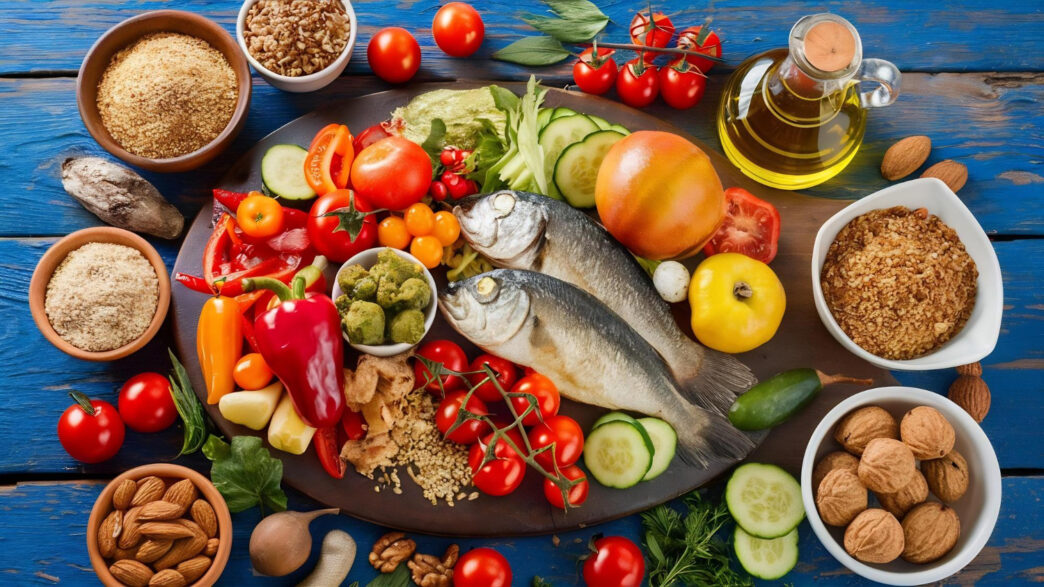
The Mediterranean diet is a flexible eating pattern built around vegetables, fruits, whole grains, legumes, nuts, olive oil, and other minimally processed foods. Rather than imposing strict rules, it emphasizes everyday eating habits traditionally associated with Mediterranean regions.
The Mediterranean diet is less of a conventional “diet” and more of a long-term approach to eating. Inspired by traditional food patterns in countries bordering the Mediterranean Sea, particularly Greece, Italy, and Spain, it focuses on plant-based foods, healthy fats, and moderate portions of animal products.
What Do You Eat on the Mediterranean Diet?
Vegetables and fruits play a central role, alongside beans, lentils, whole grains, nuts, seeds, herbs, and extra-virgin olive oil.
Fish and seafood are commonly included, while poultry, eggs, and dairy products such as yogurt and cheese can be consumed in moderation. Red and processed meats generally play a smaller role.
| Eat More Often | Eat Less Often |
|---|---|
| Vegetables and fruits | Processed meats |
| Beans and lentils | Highly processed foods |
| Whole grains | Sugary drinks |
| Nuts and seeds | Refined carbohydrates |
| Olive oil | Foods high in added sugar |
| Fish and seafood | Excessive sweets |
Importantly, there isn’t one single Mediterranean menu. Traditional Greek eating patterns differ from those found in southern Italy or Spain, for example.
Why Is the Mediterranean Diet Considered Healthy?
One reason this eating pattern receives so much attention is its emphasis on nutrient-rich, minimally processed foods.
Research has associated Mediterranean-style eating patterns with cardiovascular benefits, and they are frequently recommended as part of an overall healthy lifestyle. The combination of vegetables, legumes, whole grains, fish, nuts, and olive oil provides fiber, unsaturated fats, vitamins, minerals, and various beneficial plant compounds.
However, following the Mediterranean diet doesn’t mean that every Mediterranean food is automatically healthy. Portion sizes, overall calorie intake, food quality, physical activity, and individual health needs still matter.
How Can Beginners Get Started?
You don’t need to completely change your meals overnight. Start with simple substitutions: use olive oil as your primary cooking fat, add vegetables to lunch and dinner, replace some meat-based meals with beans or lentils, choose whole grains, and eat fish more regularly if appropriate for you.
Fruit, plain yogurt, or a handful of nuts can also replace highly processed snacks.
Perhaps the greatest advantage of the Mediterranean diet is its flexibility. There is no complicated points system or rigid list of forbidden foods. Instead, it encourages a sustainable pattern centered around whole foods, variety, moderation, and enjoyable meals—making it easier for many people to follow over the long term.